
Comparing Monocrystalline vs Polycrystalline Solar Panels
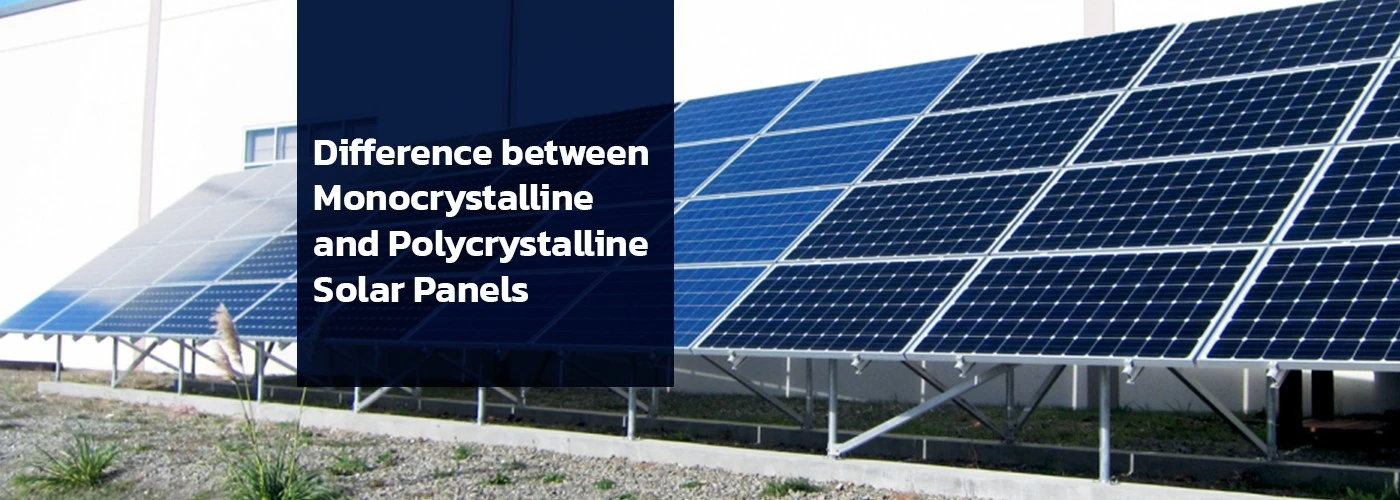
When you’re investing in a solar system, one of the key decisions is comparing monocrystalline vs polycrystalline solar panels. Which one gives you better output, better longevity, and the best value for your roof? In this article, we’ll walk through everything you need to know — from efficiency and cost, to performance under heat and shade, degradation over time, and which option generally works best in Indian conditions.
1. What Are Monocrystalline and Polycrystalline Solar Panels?
Before diving into comparisons, let’s define each type.
1.1 Monocrystalline Solar Panels
-
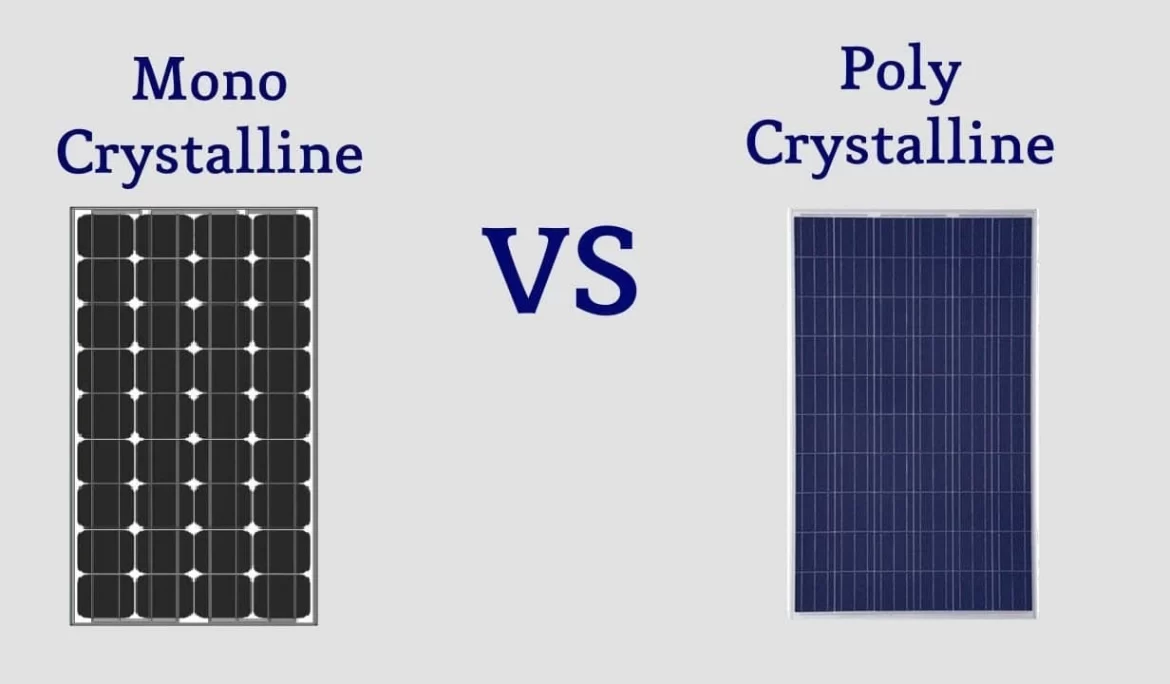
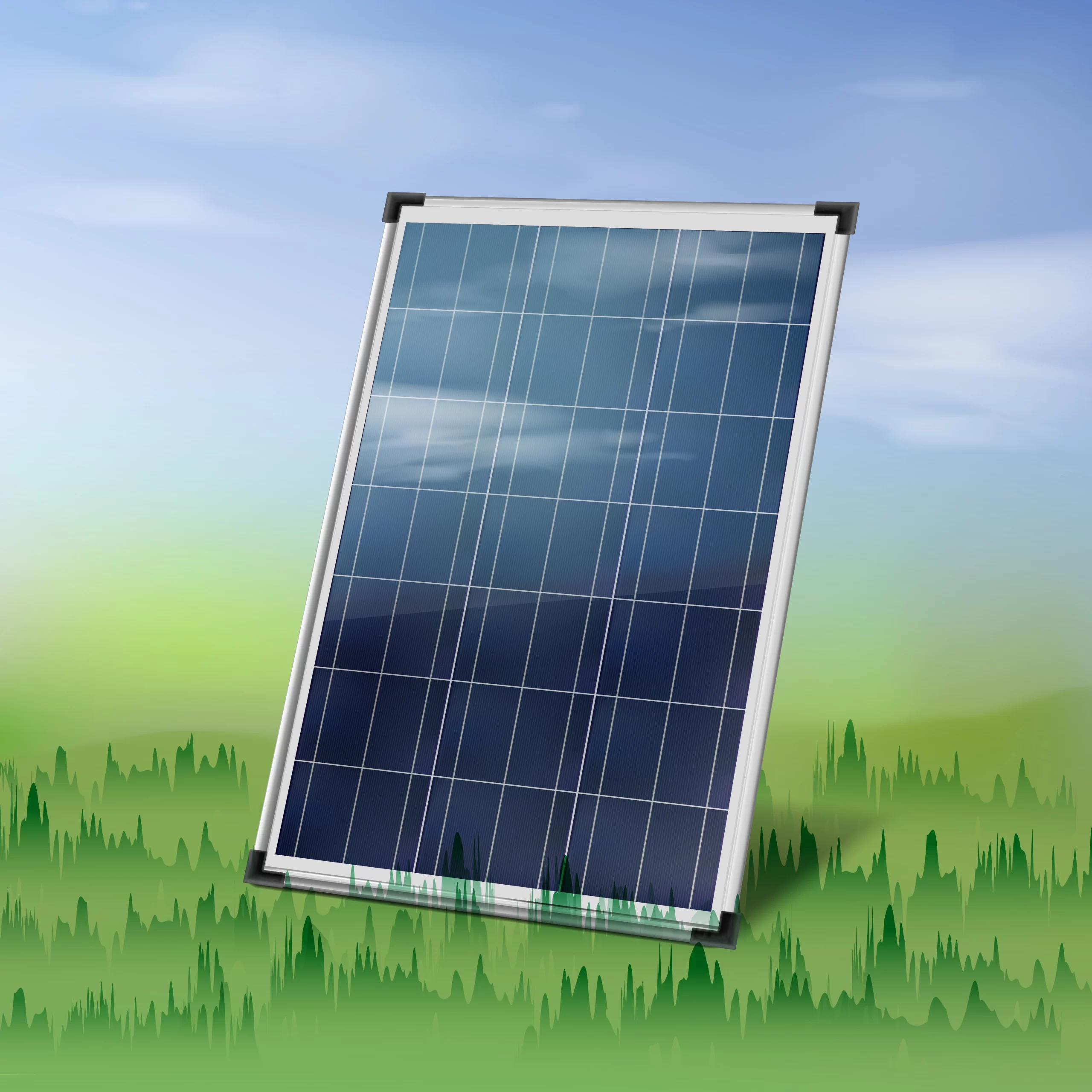
A monocrystalline solar panel is made from a single, continuous crystal of silicon (a single-crystal ingot). This uniform crystal structure allows electrons to flow more freely, reducing internal losses.
-
They typically appear black or dark, and the cell surfaces are more uniform in color.
-
Modern advancements include PERC (Passivated Emitter and Rear Cell) structures, half-cut cells, bifacial designs, etc., which further boost performance.
1.2 Polycrystalline Solar Panels

-
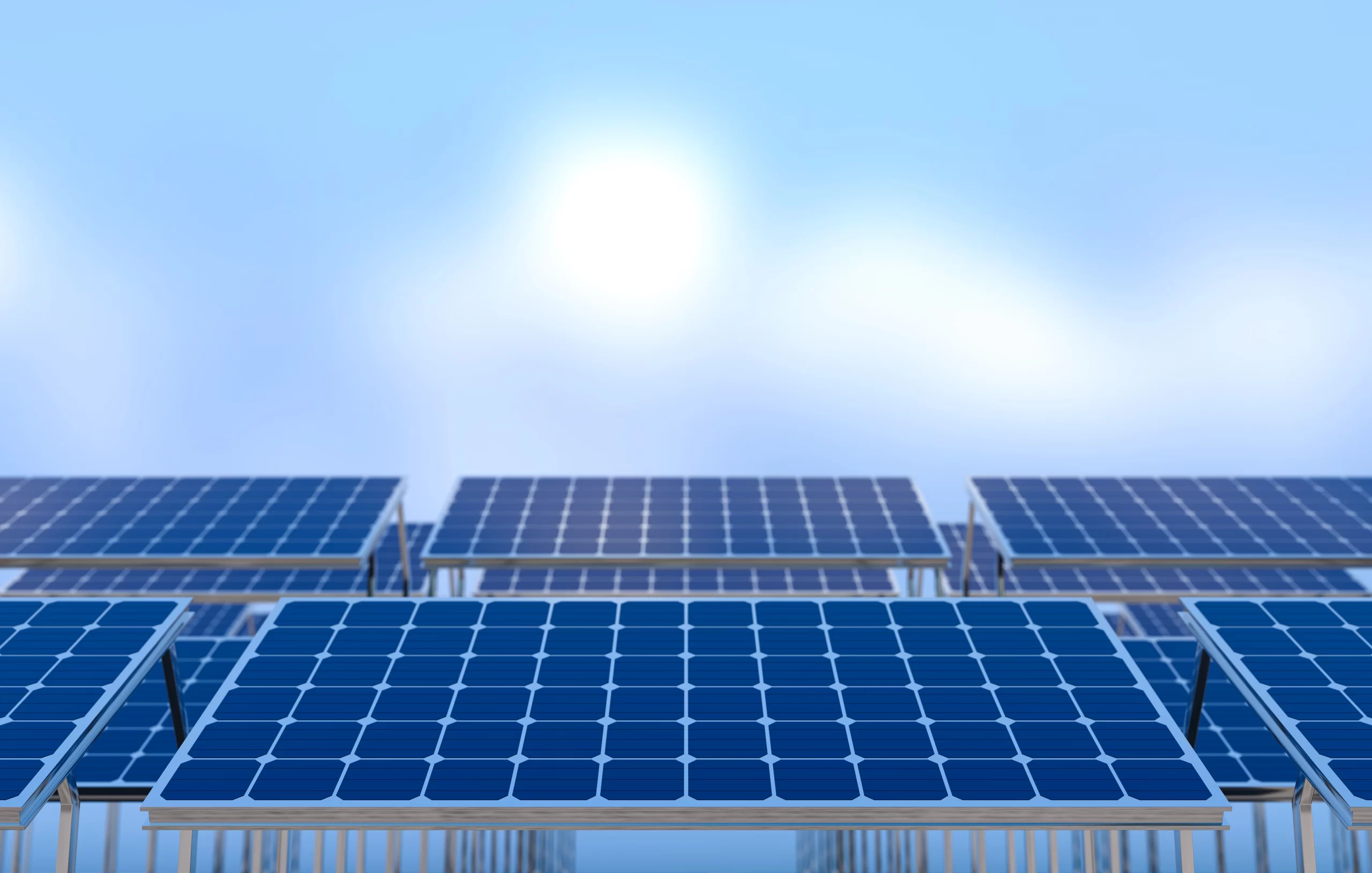
A polycrystalline solar panel is made by melting multiple fragments or crystals of silicon together, then casting that into wafers. Because the silicon is multi-crystal, there are more grain boundaries, which impede electron flow slightly.
-
These panels often have a bluish tint, and the look is somewhat speckled or mosaic-like due to different crystal orientations.
-
The manufacturing is simpler and less wasteful of silicon, which historically makes polycrystalline panels less expensive to produce.
With those definitions in place, we can compare side-by-side.
2. Key Differences: Efficiency, Cost, Performance, Degradation, Space
2.1 Efficiency & Energy Yield
One of the primary differences when comparing monocrystalline vs polycrystalline solar panels is in solar panel efficiency.
-
Monocrystalline panels generally achieve higher efficiencies because the single-crystal structure allows electrons to move with fewer obstacles (fewer grain boundaries).
-
Polycrystalline panels tend to have lower efficiencies, because the multiple crystal boundaries cause greater resistance and recombination losses.
In practical terms, for a given panel area, a monocrystalline panel may produce more wattage or energy than a similarly sized polycrystalline panel.
Furthermore, modern monocrystalline modules with PERC or half-cut cell technologies can push efficiencies higher still, narrowing the gap between theoretical and real-world performance.
2.2 Cost and Price Considerations
When comparing monocrystalline vs polycrystalline solar panels, cost is often a deciding factor for many buyers.
-
Polycrystalline panels typically cost less per watt because their manufacturing process is simpler and less wasteful of material.
-
Monocrystalline panels are more expensive, due to higher purity silicon, more precise manufacturing, and additional enhancements (PERC, half-cut, etc.).
-
However, the difference in upfront cost must be weighed against lifetime energy yield and operating conditions.
So while polycrystalline may have lower capital cost, monocrystalline often delivers more value per square foot over the system lifetime.
2.3 Performance Under Heat and Temperature Coefficient
Solar panels lose performance as temperature rises. The metric that captures this is called the temperature coefficient (percentage drop in power per degree Celsius above 25 °C).
-
Monocrystalline panels usually have a lower (i.e. better) temperature coefficient, meaning they lose less power when it gets hot compared to polycrystalline panels.
-
In hot climates like India’s, this difference becomes more meaningful, increasing the real-world advantage of monocrystalline panels.
-
Since monocrystalline modules often have improvements (such as better cell architecture or rear passivation), they may sustain performance better in heat.
So, comparing monocrystalline vs polycrystalline, monocrystalline tends to be superior under high-temperature stress.
2.4 Shade Tolerance & Partial Shading Behavior
Another important factor is how well panels deal with shade.
-
Monocrystalline panels with half-cut cell design or better bypass diode layouts can better mitigate losses when parts of the panel are shaded.
-
Polycrystalline panels often suffer more if any part is shaded, because the imperfect paths between crystals create hotspots or bottlenecks.
Thus, when comparing monocrystalline vs polycrystalline solar panels for rooftops with partial shade (trees, chimneys, other obstructions), monocrystalline often holds an advantage.
2.5 Degradation Rate & Lifespan
All solar panels degrade over time — their output diminishes slightly each year. The annual degradation rate is a key metric.
-
Monocrystalline panels, especially high-quality ones, tend to have lower degradation rates (for example ~0.4–0.6% per year)
-
Polycrystalline panels may degrade more quickly (sometimes ~0.7–1.0% per year)
-
Over 20–25+ years, small differences compound into significant drops in total energy delivered.
-
Because monocrystalline panels maintain higher output longer, the cumulative yield difference favors them in long term.
2.6 Space Efficiency and Layout
Because monocrystalline panels produce more energy per unit area (due to higher efficiency), when comparing monocrystalline vs polycrystalline solar panels:
-
You’ll need fewer monocrystalline panels or less roof area to generate the same capacity (kW)
-
If your roof space is limited, monocrystalline is often the better option
-
With polycrystalline, you need more modules, more mounting structure, more wiring — which can add to installation complexity and cost
Thus, in roof-limited scenarios, monocrystalline often gives better ROI despite its higher module cost.
3. Which Performs Better in Indian / Hot Climates?
When comparing monocrystalline vs polycrystalline solar panels for Indian conditions, several contextual factors matter.
-
India’s high ambient temperatures and intense sunlight make the lower temperature coefficient of monocrystalline panels a major plus.
-
Roof area in urban settings is often limited, making space efficiency a priority.
-
Partial shading (e.g. due to water tanks, nearby buildings, trees) is common — favoring panels with better shading resilience (monocrystalline with advanced cell designs).
-
Over long usage (20–25 years), durability, lower degradation, and consistent output make monocrystalline panels more favorable.
Because of these reasons, many installations in India are shifting to monocrystalline (especially monocrystalline PERC, bifacial or half-cut) as the preferred choice. Some reports even suggest polycrystalline modules are becoming less common in new rooftop installations in India.
However, if budget is extremely tight and roof space is abundant, polycrystalline may still be considered — but it often falls short in performance under Indian heat and shading.
4. Use Cases & When to Choose Which
When comparing monocrystalline vs polycrystalline solar panels, the optimal choice depends on your constraints. Let’s map some common scenarios:
| Scenario | Recommended Type | Reasoning |
|---|---|---|
| Roof space is limited | Monocrystalline | Higher efficiency means less area required |
| Roof is large, budget constrained | Polycrystalline | Lower cost may allow a larger system |
| Hot climate (e.g. Rajasthan) | Monocrystalline | Better temperature performance, lower coefficient |
| Partial shading present | Monocrystalline (with advanced design) | Better shading resilience |
| Short-term horizon (5-10 years) | Polycrystalline may be acceptable | The energy difference is less pronounced early on |
| Long-term, 20+ year horizon | Monocrystalline | Lower degradation and sustained output |
Thus, comparing monocrystalline vs polycrystalline isn’t always black and white — you must weigh space, budget, climate, shading, and long-term goals.
5. Secondary Considerations: Warranty, Quality, Installation Costs
When evaluating comparing monocrystalline vs polycrystalline solar panels, don’t forget these secondary but important factors:
-
Warranty & guarantee terms: Monocrystalline modules from reputable manufacturers often carry stronger warranties (performance and product)
-
Quality and manufacturer reputation: The best monocrystalline or polycrystalline module is always better than a poor one. Choose Tier-1, certified modules
-
Installation costs: More panels (in polycrystalline) means more structural mounting, more junction boxes, more labor
-
Balance-of-system (BoS) costs: Wiring, combiner boxes, junctions — more modules also mean more BoS cost
-
Operational & maintenance: Fewer modules simplify maintenance (cleaning, inspection)
-
Future expansion: With monocrystalline giving headroom, you may have flexibility to expand in future
These considerations often amplify the real-world difference between the two types beyond just module specifications.
6. Real-World Example / Sample Comparison
Let’s walk through a simplified hypothetical comparison to illustrate how big the difference can become when comparing monocrystalline vs polycrystalline solar panels.
Suppose:
-
You have a rooftop space that fits 20 modules
-
A monocrystalline module gives 400 W, polycrystalline gives 320 W (due to lower efficiency)
-
Monocrystalline degrades at 0.5% annually, polycrystalline at 0.8%
-
Temperature coefficient: mono –0.35% / °C, poly –0.45% / °C
In year 1, the mono system generates more power. Over 20–25 years, as degradation compounds, the mono system retains a larger share of original capacity, widening the energy output gap. Also, in peak summer heat, monocrystalline will lose less relative output.
This reinforces the point: when comparing monocrystalline vs polycrystalline solar panels, you often win over time with monocrystalline — especially in challenging conditions.
7. Common Myths & Misconceptions
When discussing comparing monocrystalline vs polycrystalline solar panels, some myths often arise. Let’s debunk a few:
-
Myth: Polycrystalline is obsolete everywhere.
While less common in new premium installations, polycrystalline is still used where cost is critical and conditions are forgiving. -
Myth: Higher price always means better monocrystalline module.
Price is only one metric — you must look at efficiency, degradation rate, manufacturer warranty, certifications, etc. -
Myth: Performance difference is negligible.
Over time and in real-world conditions (heat, shading), the difference can be quite meaningful. -
Myth: Monocrystalline always outperforms in every condition.
In some rare cases (extremely uniform and cheap poly module, in a cool climate, with no shading), the difference may be small — but that is more the exception than rule.
8. Summary: Which Should You Choose?
So, after thoroughly comparing monocrystalline vs polycrystalline solar panels, which one should you choose? Here’s a summary guideline:
-
If you have limited rooftop area, want the best yield per square meter, expect high temperatures, or want long-term value: go with monocrystalline (ideally PERC, half-cut, etc.).
-
If your budget is tight, and roof area is generous, polycrystalline might still be acceptable — but be aware of the trade-offs in efficiency, output, and long-term degradation.
-
Always evaluate module quality, manufacturer warranty, certifications, and installation conditions — these often play a larger role than nominal module type differences.
-
Use a realistic energy yield and financial model over 20–25 years to see which option gives better ROI in your locale.
Finally: comparing monocrystalline vs polycrystalline solar panels is not a one-size-fits-all decision — it depends on your goals, roof, climate, shading, and budget. But in many modern rooftop solar use cases, monocrystalline (with improved technologies) often leads.
9. Frequently Asked Questions (FAQs)
Q1: Are polycrystalline panels still manufactured and useful?
Yes, polycrystalline panels are still produced, though their popularity is declining in premium installations. They remain useful where cost is a dominant constraint and conditions are less demanding.
Q2: Does the color (black vs blue) affect performance?
Color is more of a visual side-effect than performance driver. The black appearance in monocrystalline arises from uniformity and anti-reflective coatings, but efficiency and cell structure are the real drivers.
Q3: Can monocrystalline and polycrystalline modules be used together?
You can mix them, but it’s not ideal because their electrical characteristics differ (voltage, current, temperature behavior). Mismatches can reduce performance. It’s better to keep the module type uniform in a string or array.
Q4: How big is the difference over 25 years?
Even a small extra 0.2–0.5% degradation difference compounds. A monocrystalline array might deliver 10–20% more total energy over its lifetime under many real-world conditions, depending on climate and shading.
Q5: Which is better for commercial / utility scale?
At utility scale, cost per watt dominates, and other technologies (including monocrystalline, poly, thin-film, bifacial, etc.) are considered in mix. For rooftop or constrained sites, monocrystalline often holds an advantage.