

☀️ Step-by-Step Explanation on How to Invest in Solar Power
Investing in solar energy is one of the smartest and most sustainable financial decisions you can make today. In this step-by-step explanation on how to invest in solar power, we’ll guide you through everything you need to know — from understanding the benefits of solar investments to choosing the right solar company and installation plan. Whether you’re a homeowner, business owner, or investor, this guide will help you make informed choices that benefit both your wallet and the planet.
In this guide, you’ll get a step-by-step explanation on how to invest in solar power, covering everything from planning and installation to long-term returns and government incentives in India.
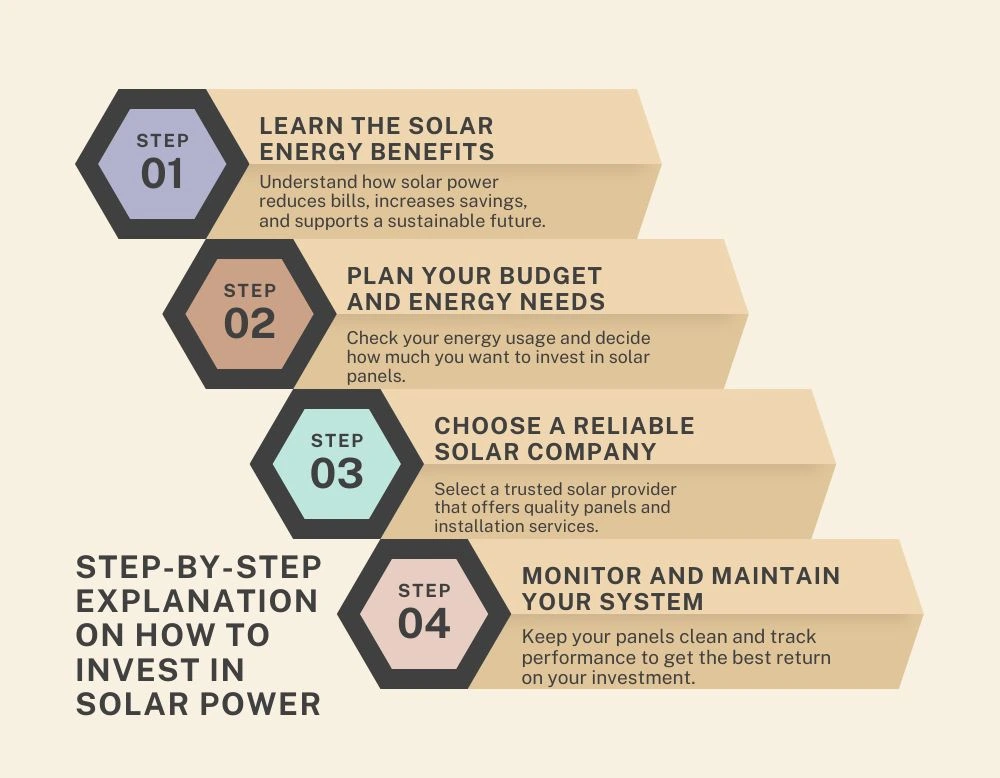
Why Invest in Solar Power?
Before diving into the steps, let’s understand why solar power has become a preferred investment in recent years.
-
Rising Energy Demand:
India’s power needs are growing rapidly, making renewable energy a necessity rather than an option. -
Cost Savings:
Once installed, solar panels drastically reduce electricity costs for homes and businesses. -
Government Support:
Policies like the Rooftop Solar Scheme and PM-KUSUM Yojana encourage individuals and farmers to adopt solar power through subsidies and loans. -
Sustainability:
Solar energy contributes to a cleaner environment by reducing carbon emissions and reliance on fossil fuels.
These reasons make the step-by-step explanation on how to invest in solar power not just financially sound but also environmentally responsible.
Step 1 – Understand Your Solar Investment Options
The first step is knowing the different ways you can invest in solar power.
1. Rooftop Solar Systems
Installing solar panels on your residential or commercial rooftop helps reduce your monthly electricity bill. You can even sell excess energy back to the grid under net metering policies.
2. Solar Farms and Community Projects
Investors can also participate in large-scale solar farms. These projects allow multiple investors to share ownership, making it easier to generate steady income from renewable energy production.
3. Solar Stocks and Mutual Funds
If you prefer indirect investment, you can buy shares in solar energy companies or green mutual funds that focus on renewable energy projects.
Understanding these choices helps you decide which form of solar investment aligns best with your budget, risk appetite, and goals.
Step 2 – Evaluate Financial Returns
The next step in this step-by-step explanation on how to invest in solar power is understanding returns. Solar investments offer multiple benefits:
-
Reduced Electricity Costs:
Solar panels usually pay for themselves within 4–6 years. After that, the power you generate is nearly free. -
Government Subsidies:
In India, residential users can receive subsidies covering up to 40% of the installation cost. -
Tax Benefits:
Businesses investing in solar panels can claim depreciation benefits under income tax laws. -
Attractive ROI:
The typical return on investment (ROI) from solar projects ranges between 10%–20% annually, depending on location and setup.
Such financial advantages make solar a strong and stable long-term investment.
Step 3 – Choose a Reliable Solar Company
Selecting the right partner is crucial. Look for a solar company that offers complete solutions — from design and installation to maintenance and government paperwork.
Checklist for Choosing the Right Company:
✅ Verified government certifications (MNRE-approved)
✅ Proven installation record
✅ After-sales service and warranty support
✅ Transparent pricing and financing options
A trustworthy solar partner ensures your investment is efficient, compliant, and delivers the expected benefits of solar investment.
Step 4 – Site Inspection and Feasibility Study
Before installation, experts will visit your site to analyze:
-
Roof orientation and shadow impact
-
Space availability
-
Power consumption pattern
-
Load capacity and safety standards
This assessment ensures your system produces optimal energy and maximizes your returns.
Step 5 – Installation and Grid Connection
Once the design and financing are finalized, installation begins. The process typically includes:
-
Mounting solar panels and inverters
-
Electrical wiring and connection
-
Grid synchronization and testing
After approval from the local electricity board, your system goes live — and you begin generating clean energy.
From this point, you start seeing the solar energy benefits, such as reduced bills and energy independence.
Step 6 – Monitor and Maintain Your Solar System
Modern solar setups come with mobile apps or online dashboards that show real-time energy production and performance. Regular cleaning and inspection ensure long-term efficiency.
A well-maintained solar system can operate efficiently for 25 years or more, giving you decades of renewable energy investment returns.
Step 7 – Earn from Solar Energy
Solar isn’t just about savings — it can also generate income:
-
Net Metering: Sell excess power back to the grid and earn credits.
-
Feed-in Tariff Programs: Receive payment per unit of solar power generated.
-
Solar Leasing Models: Rent your rooftop space to solar companies for additional income.
This step in the step-by-step explanation on how to invest in solar power shows that solar energy is not only sustainable but also a reliable source of passive income.
Step 8 – Stay Updated with Government Schemes
The Indian government frequently launches new solar programs and incentives to boost adoption. Stay informed about:
-
MNRE subsidy programs
-
State-level solar policies
-
Net metering rules and tariff changes
By taking advantage of these, you can improve your returns and enjoy maximum solar energy benefits.
The Long-Term Benefits of Solar Investment
Investing in solar power offers more than just financial rewards:
-
Environmental Protection: Reduces your carbon footprint.
-
Energy Independence: Protects you from rising electricity tariffs.
-
Property Value: Solar-equipped homes have higher market value.
-
Job Creation: Supports India’s clean energy economy.
These combined benefits of solar investment prove that going solar is a smart, future-ready decision.\
Conclusion
Investing in solar energy is not complicated — it’s a systematic journey that rewards both your wallet and the planet. Through this step-by-step explanation on how to invest in solar power, you’ve seen how the process works: from evaluating options and choosing the right company to enjoying steady returns and government benefits.
As India moves toward a clean energy revolution, there’s no better time to start. By investing in solar today, you’re not only saving money — you’re investing in a sustainable, brighter tomorrow.